





Grocery shopping feel like a drag, but want to eat in more often?
Like the idea of buying food for the week—but overwhelmed about how much money to spend?
Want to start “eating healthier,” but have no idea where to start?
Tend to buy the same things every week—in autopilot mode—lacking inspiration?
According to a survey conducted by Peapod and ORC International, MORE people—particularly millennials—WANT to cook and eat in more at home than ever before.
In fact, 72-percent of Americans already report cooking from home four nights or more per week.
Interestingly, the survey found that millennials are twice as likely as their older counterparts (49 percent of millennials vs. 24 percent of baby boomers) to want to cook and meal plan for at home meals; and the top three reasons for dining in include saving money (60 percent), eating healthy (59 percent) and wasting less food (55 percent).
Do you want to save money and eat healthier too?
Hello grocery shopping!
THE GROCERY SHOPPING DILEMMA
It’s no secret that home-prepared meals are king when it comes to saving money and healthy eating.
BUT…Sometimes, it’s just so daunting.
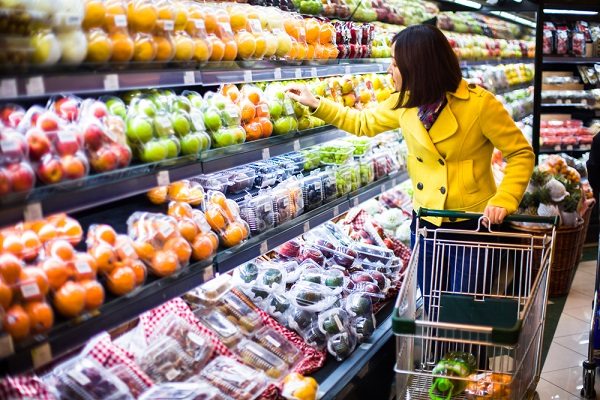
In fact, statistics reveal that more and more Americans are grocery shopping dining in LESS frequently—with just 5.6% of total disposable income (USDA, 2017) spent on grocery purchases. By comparison, Americans spend 4.3% of their disposable income on dining out or meal delivery.
Moreover, when Americans DO grocery shop, a large portion of their grocery dollars goes towards FAKE, convenience foods.
Did you know that 80-percent of the food sold in our grocery stores is MAN-MADE food products (i.e. not real food)—like frozen dinners, bars, fat-free ice cream and artificially sweetened yogurts?
And many of these fake, man-made food products are masked in labels of “health” too—cleverly-marketed as “gluten-free,” “sugar-free,” or “high-protein.”
Translation: It’s downright confusing what to buy (or not buy)—and how to really stretch your dollars on foods that do a body good.
Never fear—10 Grocery Shopping Hacks & Tips are here!
Whether you’re in a food rut, overwhelmed when you step foot into the grocery store, or simply want some tips and tricks on how to eat well (and save cash at the same time), I’ve got yo’ back.
Let’s do a walk-through together of how to navigate the grocery store with these 10 Hacks for Healthy Grocery Shopping on a Budget:
(Teach a woman to fish and she will fish for a lifetime).
Healthy Shopping Hacks

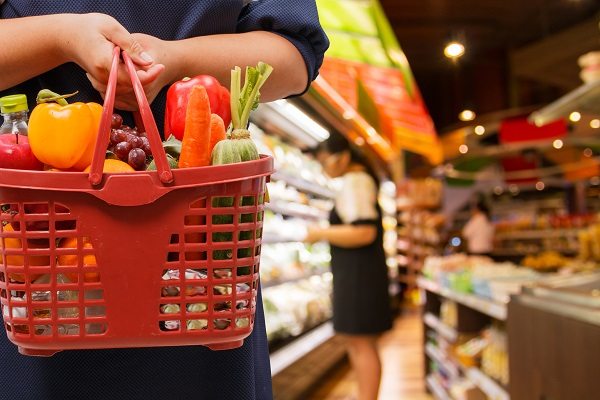
- Shop the Perimeter.
This is where the real food lies—produce, meat, seafood and some (quality) organic dairy products.
- Look for These Words:
- Meats: Organic or Pasture-Raised Chicken & Eggs; Grass-fed Beef/Bison; Organic Lamb; Pastured Pork
- Seafood: Wild-Caught Fish & Shellfish
- Produce: Organic “Dirty Dozen” Fruits & Veggies, GMO-Free
- Dairy: Organic, Grass-fed, and/or Pasture Raised Butter, Yogurt (Plain & Live & Acvie Cultures)
- Packaged Products: Grain-Free, GMO-Free, Paleo Certified, ingredients with names you can pronounce (and as few ingredients as possible); No funky chemicals, sugars or gums
- Don’t Fall Right Away for These Foods or Words:
- Meats: Natural (not regulated term), Fed a Vegetarian-Diet, Hormone and Antibiotic Free (it SHOULD be)
- Seafood: Farm-Raised
- Dairy: Pasteurized, Added Sugars & Artificial Sweeteners
- Packaged & Processed Products: Ingredients and chemicals with names you can’t pronounce, Sugar, High-fructose Corn Syrup, Soy, Casein, Artificial Sweeteners,
- “Gluten-Free” Products: Look at the label still for chemicals, rice, corn, sugar and soy; Ask: Is it a real food? Or a fake food—still? (Most gluten-free products are just as processed)
- “Fruits:” 100% “Real Fruit” (bars, juices, bottled smoothies)
- “Heart Healthy:” Unregulated claims, Negligible, Based on the old-school food-guide pyramid
- “High-Protein:” Often soy protein, rice or pea protein, casein or whey—indigestible forms of protein; Also lookout for artificial sweeteners
- Keep it Simple.
Think: Proteins, veggies and healthy fats as the base of your meals. For the week, aim to buy:- Proteins: 3 to 4 different proteins (like 1 lb. of fish, whole pastured chicken, pastured eggs and 2-3 lbs. ground beef or turkey)
- Fibrous Veggies: 2 to 3 different fibrous veggies (leafy greens, asparagus, brussels sprouts)
- Starches: 2 to 3 different starches and tubers (sweet potatoes, butternut squash, spaghetti squashes, plantains
- Fruits: 1 to 3 different fruits
- Healthy Fats: 3 to 5 different fats on hand (avocado, coconut oil, ghee, olive oil, coconut butter)
- Spices of Choice. Spice things up with seasonings you find in the bulk aisle bins, herbs from the produce section and healthy additive-free condiments (see point 6 below)
- Map Out Your Meals for the Week & Make a List
Before you hit the store, make a game plan. Come up with at least 2 different breakfast options, 2 to 3 different lunch options and 3 to 4 dinner options (can also use leftovers for lunch) for the week to buy ingredients around. For example:
Breakfast 1:Coconut Milk + 1/2 Banana + Spinach + Almond Butter + Protein Powder Smoothie
Breakfast 2:Turkey Sausage Links + Avocado + Greens & Mushrooms (in ghee or coconut oil)
Lunch 1: “Chicken Salad” with Paleo Mayo on top of greens or wrapped in Lettuce Wrap + Roasted Butternut Squash, Roasted Carrots or Steamed Beets
Lunch 2:Canned Wild Salmon or Tuna + Avocado & Dijon Mustard + Cucumber Slices + Piece of Fruit or Plantain Chips
Lunch 3: Dinner Leftovers
Dinner 1:Spaghetti Squash with Ground Turkey Meatballs, Broccoli in Ghee
Dinner 2:Baked Halibut or Cod + Sweet Potato + Asparagus wrapped in Turkey Bacon
Dinner 3:Ground Turkey Tacos + Lettuce Wrap + Guacamole + Roasted Summer Squash
Dinner 4: Whole Roasted Chicken + Cauliflower Mash + Pan-Fried Kale in Coconut Oil
Budget-Friendly Hacks
- Stock Up.
When you come across organic meat or fish on sale, or shelf-stable foods you use often (coconut oil, avocado mayonnaise, olive oil, etc.), take advantage. Freeze the meats and store extra products in your cabinets. Co-Op shopping programs and websites, like Thrive Market or Costco and Sam’s Club can also be good places to find staples. And, of course, the Bulk Bins (spices, coconut oil, almond butter, nuts, etc.) are much more cost effective than buying individuals spices, oils and nuts.
- Choose Full-Fat.
Fattier cuts of organic, pasture-raised and grass-fed meats, chicken (chicken thighs, whole chickens) and dairy are typically about the same price as the lean, natural (non-organic) meats, chicken and dairy.
- Cut Corners Here.
If pasture-raised and grass-fed is NOT in your budget for everything, cut corners on your cash flow, here:
Produce: Non-organic produce of the “Clean 15”
Meat: Opt for the natural lean-versions of chicken (chicken breast), beef (sirloin, loins, ground round) and organic, cage-free eggs.
Packaged & Processed Foods: Just say “no.” Your dollars are better spent on real food.
- Buy In-Season.
Look out for the sales in the produce section. Regardless of where you are shopping, the fruits and veggies that are ‘in season’ are typically on sale—meaning less GMO or conventionally grown, since they are more in natural state.
- Make a List.
Not to sound like a broken record here, but failing to prepare is preparing to fail. Go into each shopping expedition with a game plan of what you’re coming out with. Another way to keep your eyes from eating with your wallet is to order Instacart, Shipt or Amazon Prime Fresh (coming soon to many zip codes).(Fun Fact: The U.S. online grocery market is estimated to generate sales worth of about 14.2 billion U.S. dollars in 2017, with sales forecast to reach 29.7 billion U.S. dollars by 2021.)
Bonus: Hidden Finds.
This day in age, more and more true “real food” packaged products are coming out on shelves. While many “gluten-free” or “sugar-free” foods—like crackers and ice cream—DO have tons of other processed ingredients and additives, there ARE some rare finds of convenient foods that do NOT have fake products.