




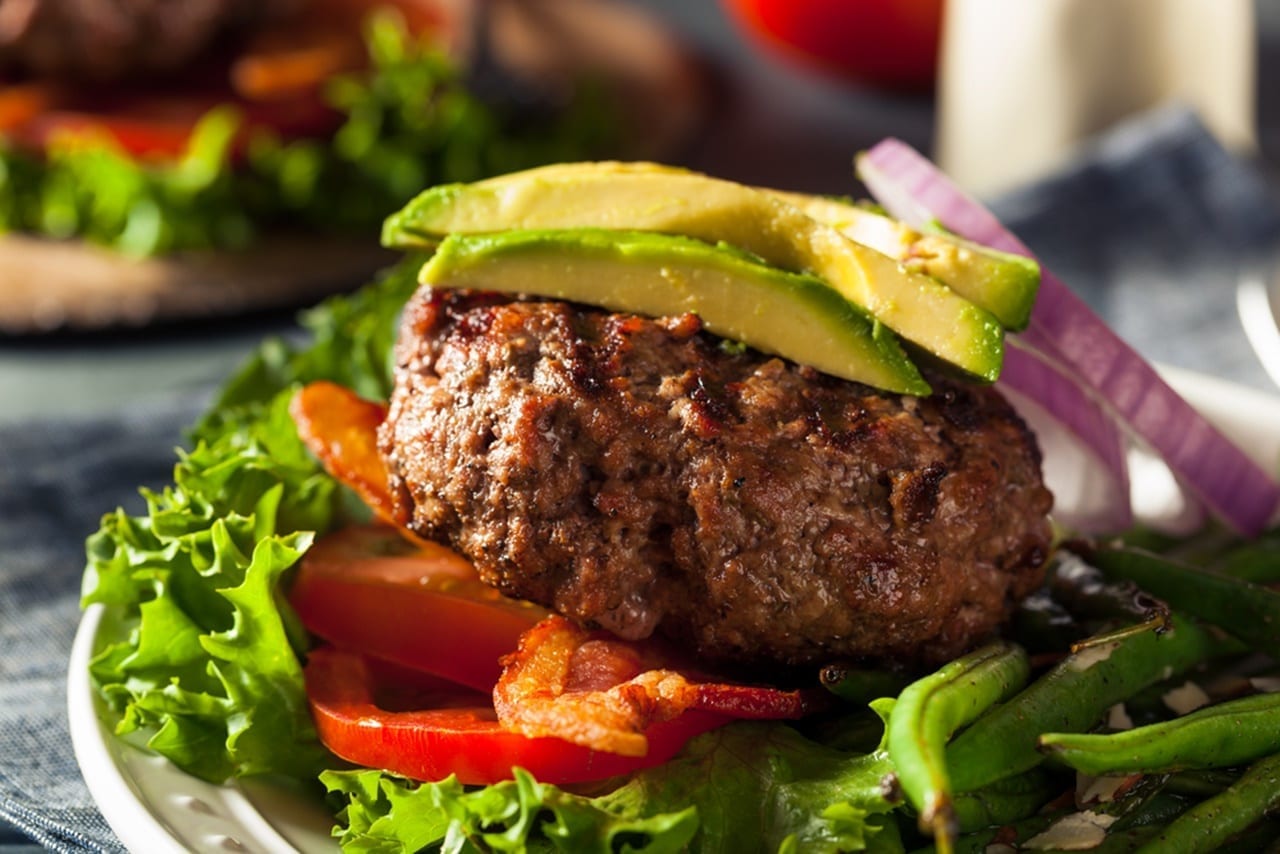
Is the keto diet good to heal SIBO? Maybe…and maybe not. Read on to find out when keto is good for SIBO, and when it is not.
“Low Carb Heals Gut Problems”…False.
Keto diets, low carb diets and low FODMAP diets are often recommended by nutritionists, holistic doctors and Instagram bloggers for healing gut problems like SIBO, candida, dysbiosis and leaky gut.
Since carbohydrates are the #1 food source of many gut bacteria, the theory behind low carb, keto diets for gut issues is that you “starve” unhealthy gut bacteria. Starchy carbs and FODMAP foods, in particular, are foods that contain high amounts of fermentable fiber and sugar that gut microbes lowhen researchers extracted bacteria from the stool of people on a keto diet and inserted their gut bacteria into the guts of mice, the researchers observed a huge a drop in levels of a critical infection-fighting cells, known for promoting inflammation and autoimmune disease (5).ve to feast on. Hence, if you don’t eat them, theories state that you’ll keep SIBO, candida and other gut woes at bay.
The problem with cutting carbs out? Symptoms may return!

Many people find their SIBO symptoms (bloating, IBS, loose stools, constipation) resolve for a short time on a keto or low carb diet, only to have them soon return when they re-introduce carbs and FODMAPS back into their diet. Others discover that, even without reintroducing carbohydrates, after following a keto diet for SIBO for several months, symptoms get worse, not better.
Further complicating things, many people who go on keto diets or follow a low carb, low FODMAP lifestyle develop unnecessary anxiety or food rules around carbohydrates in the name of “gut healing.” A diet that began as an experiment and tool to help heal their gut, soon becomes an identity or rule book, triggering feelings of guilt and anxiety at the mere thought of eating a sweet potato or other foods on the “no list”, leaving them restricted to a diet of just 5 to 10 foods.
The kicker? Carbs are not the enemy. Nor is fat or a short-term ketogenic or low carb diet. In fact, both carbs and healthy fats can help you overcome SIBO rebuild a healthy gut biome, when eaten strategically.
Let’s briefly discuss what carbs and fats do for the gut biome, then I’ll give you a 3-step approach to use a ketogenic diet for SIBO, along with my top 5 SIBO healing strategies.
The Carb-Gut Connection
You are at least 50 to 60% bacteria, and 40 to 50% human cells (1).
Although the word “bacteria” sounds like it belongs in the same context as a stomach bug or a 6th grade science experiment, bacteria is a good thing and the more diverse and healthy your bacteria—particularly your gut bacteria, the healthier you are.
How to cultivate more diverse, healthy gut bacteria? Through your diet (2)! You are what you digest—meaning the foods you eat can greatly influence how you think, how you feel, your genetic expression, your physical fitness, disease and wellness—all due to how your food influences your gut bacteria.
At a physiological level, your body and gut bacteria are omnivorous in nature—meaning your gut bacteria thrive upon a balance of carbohydrates, fats and proteins in order to keep your gut biome in balance. Your gut bacteria also thrive upon your digestive system’s ability to actually digest and process these foods in the first place—things like stomach acid, digestive enzymes, a healthy liver and gallbladder (your master detoxifier and waste-producing organs).
If your diet is out of balance, or if your digestive mechanics are not operating as they should, then your gut bacteria cannot fuel your body appropriately, and we run into “gut problems” and a host of health issues—hormone imbalances, allergies, immune dysfunction, poor aging, unwanted weight gain, cancer, headaches, brain fog, impaired detox pathways, and…gut issues, like SIBO (3).
In short: what you eat and what you digest are pretty important for how you feel.
By human design, complex carbohydrates and fibers (found in vegetables, fruits, whole grains and legumes) have the greatest influence on the human gut microbiota—specifically “microbiota-accessible carbohydrates” (MACs), complex carbohydrates that cannot be digested by humans but which are metabolically available to gut microbes.
Translation: Carbohydrates are the #1 food of choice for a diverse, healthy gut microbiome…at least in an ideal world.
Although the exact amount of carbohydrates that each person needs will vary and is 100% individualized to them—greatly dependent on your ancestry and digestive capacity (Do you have enough stomach acid? Enzymes? How is your liver and gallbladder function? Do you have leaky gut?)—there is no question that carbs do a body (and gut biome) good.
In fact, several studies comparing the diets of healthy, disease-free modern day hunter gatherers, like the Hazda tribe, to Westerners (us)—particularly in the U.S. where more than 1 in 2 people have a chronic disease—reveal that healthy, disease-free hunter gatherers eat upwards of 70 to 100 grams of fiber (carbs) every day in their diet, whereas the average American (even those on a paleo or vegan diet) eats about 15 to 20 grams of fiber (4).
The Keto-SIBO Connection

So if humans are designed to eat and digest carbohydrates—as well as proteins and fats—why do some people seem to get SIBO, candida or dysbiosis if they eat carbohydrates?! Moreover, why do people on a keto diet report less bloating, less brain fog, more energy, a boosted metabolism and improvement in SIBO symptoms?
This is where understanding: (a.) what causes SIBO in the first place, and (b.) how to use a keto diet for SIBO healing therapeutically (short term) comes into play.
SIBO, candida and dysbiosis—characterized by overgrown or disrupted gut microbiota— are not normal conditions for any human. Period. Common SIBO triggers include:
Common Causes SIBO
- Nutrient deficiencies (B vitamins, zinc, magnesium, Vitamin K, Vitamin D)
- Low stomach acid
- Low digestive enzyme production
- Sluggish liver/gallbladder function (toxic burden)
- Sedentary lifestyle or overtraining
- Birth control pill
- Long-term SSRI use
- PPI’s (proton pump inhibitors)
- Antibiotics
- Mold exposure/mycotoxin illness
- Poor diet (long term restriction; processed foods; lack of fiber; refined carbohydrates; sugar)
- Stress
Once you have SIBO, candida, or dysbiosis, desperate times may call for more desperate measures—particularly changes in your diet to help bring your gut biome back to balance.
Enter: The role of a (short term) low carb or keto diet approach, while also addressing the SIBO or other underlying gut imbalances with supportive lifestyle, environmental and supplement therapies (more on this in a minute).
How Low Carb (Keto) Diets May Help SIBO…And How They May Hurt
Have you ever wondered why 99% of diets work in the short term, only to fail in the long-term? The answer lies in your gut bacteria.
An acute change in diet—for example, one that is strictly animal-based, fat-based or plant-based—alters gut bacteria composition within just 24 hours of initiation, with reversion back to your baseline within 48 hours of diet discontinuation (8).
Contrary to popular belief, did you know that low carb, high protein diets and/or high fat diets can both help treat and feed SIBO? It all depends on your game plan—how long you follow a therapeutic keto diet, the supplements you take, incorporation of probiotics and prebiotics, lifestyle and environmental changes, and stress modifications.
High Protein Diets & SIBO

Studies show that animal-based diets increase the abundance of bile-tolerant microorganisms (Alistipes, Bilophila, and Bacteroides) and decrease the levels of Firmicutes that metabolize dietary plant carbohydrates (Roseburia, Eubacterium rectale, and Ruminococcus bromii)—which is why folks who follow a carnivore diet may report feeling bloated, constipated or brain foggy if they eat a sweet potato (2). However, in the short term, if you technically had an abundance of Firmicutes bacteria from a previous higher carbohydrate diet, switching to a higher protein/lower carb diet may be beneficial to bring things back to balance.
Protein “putrefaction” (bacteria fermentation of proteins) is also common in low carb diets—most often occurring when low stomach acid is present and bacteria can’t fully breakdown proteins. This leads to the excretion of gases and organic compounds, like amines, in the GI tract; smelly, rotten gas; bloating; dysbiosis and small intestinal bacterial overgrowth (6).
High Fat Diets & SIBO
Keto diets work the same way. Similar shifts occur in keto diets—dramatically forcing your gut bacteria to alter their metabolism to use fatty acids, rather than carbohydrates, as their primary energy source. Stool samples from people following a keto diet (5% carbs, 15% protein and 80% fat) reveal “significant shifts” in levels of 19 bacterial “families.” Even more, when researchers extracted bacteria from the stool of people on a keto diet and inserted their gut bacteria into the guts of mice, the researchers observed a huge a drop in levels of a critical infection-fighting cells, resulting in an increase in inflammation and autoimmune disease (5).
On the flip side, low carb, keto diets can also significantly reduce both beneficial gut microbes such as Akkermansia muciniphila and short chain fatty acids, as well as contribute to “metabolic endotoxemia” (leaky gut) and feed candida with ketones, consequently producing more bacteria in the upper GI (SIBO) and lower overall microbial diversity (7). Keto diets also force some gut bacteria to simply go dormant (fall asleep) during the time they are on the diet.
Hence: This is the biggest reasons why SIBO protocols, keto diets and low FODMAP diets for SIBO fail are: (a.) they are followed for too long—shifting the gut biome to the other end of the spectrum (loss of diversity and dysbiosis); and (b.) most people don’t focus on healing beyond a low carb diet and antimicrobial protocol—both which can kill off SIBO in the short term, only to lead to its comeback in the long term if you do not also focus on re-building up a healthier gut biome (prebiotic carbs included).
The bottom line: Long term low carb keto diets are not effective for healing SIBO, but strategic (short term) keto diets can be used for treating SIBO…especially if you have a SIBO healing game plan, like my 3 phase SIBO diet strategy below.
What Can I Eat to Heal SIBO?: 3 Phase SIBO Diet Strategy
With all the food restrictions on a typical “SIBO diet” or “anti-candida diet,” it can be easy to get caught in the trap of eating spinach, chicken and coconut oil. At every meal.
The reality: You don’t have to eat the same thing every day; avoid carbs forever; or restrict yourself to only 5 to 10 foods in order to heal SIBO.
Eating (strategically) for SIBO occurs in 3 phases:
- Phase 1: Real Food Baseline
- Phase 2: Low Starchy Carb/Fruit + Higher Greens, Protein & Fat
- Phase 3: Reintroduction of Prebiotics and MACs (microbiota accessible carbohydrates)
Phase 1: Real Food Baseline
Before diving into a low carb, low FODMAP, or keto diet, get your feet “underneath you” with a solid base of nutrient-dense, whole foods. Think: If it didn’t grow on the land, swim in the sea, or roam the earth, it’s not real food.
Eat
- Grass-fed, pastured meats and poultry
- Wild caught, cold water fatty fish
- Colorful, fresh fruits and veggies
- Some starchy tubers & root veggies
- Fermented foods
- Properly prepared beans, gluten free oats and rice (soak and dry)
- Clean, filtered water
- Raw nuts and seeds
Avoid
- Inflammatory foods: refined grains, gluten, dairy, sugar, sweeteners, soy, peanuts, alcohol, canola oil and other industrial seed oils, farm raised fish, conventional meats/poultry, pork, MSG, instant coffee
Google the words, “Paleo” or “Ancestral Diet” and do your best to just steer clear of most things in boxes. Use labels that contain more than 5 to 6 ingredients. Here are a few meal ideas:
Phase 1 Meal Ideas
- Chicken Salad with Avocado Mayo, Seed Crackers, Cucumbers
- Scrambled Eggs, Turkey Bacon, Spinach & Mushrooms in Ghee, Avocado
- Mixed Greens, Pulled Chicken, Beets, Cucumbers, Goat Cheese, Oil & Vinegar
- Grass-fed Ground Beef Taco Meat, Romaine Lettuce, Roasted Squash, Guacamole, Olives
- Wild Caught Salmon, Cinnamon Roasted Butternut Squash, Asparagus drizzled in Olive Oil
Note: If you’ve ALREADY been eating a “real food” diet, skip right on to Phase 2. You’re ready to take it up a notch.
Phase 2: Low Starch/Fruit + Greens, Fat, Protein
You don’t have to eat a Hershey’s candy bars to feel the “effects” of SIBO. Foods higher in starch or FODMAPs (sugars)—like Brussels sprouts, cauliflower, kale sweet potatoes, whole grains, apples and beans—can make you pretty miserable if SIBO is present.
For this reason, Phase 2 is a short-term (30 to 60 days) “reset”—taking the foods that flare symptoms down a notch, while focusing on your holistic SIBO healing protocol (discussed in a moment), along with consuming plenty of green things, proteins, and healthy fats.
Eat
Organic, Pastured & Grass-fed
- Meats
- Poultry
- Lamb
- Eggs
- Wild-Caught Fish
Real Bone Broth & Meat Broth
Not chicken broth from a carton
Healthy Fats
Ghee, olive oil, olives, avocado oil, paleo mayo, lard, tallow, duck fat, pastured egg yolks, avocados, coconut oil, coconut butter
Low Fructose Fruits:
- Apricot
- Berries
- Cantaloupe
- Cherries
- Grapefruit
- Green tipped banana
- Honeydew
- Nectarine
- Peaches
- Pineapple
- Plum
- Orange
Colorful Low-FODMAP Veggies & Starches
- Beet
- Bok choy
- Carrot
- Cassava / Yuca
- Chard
- Cucumber (including pickles made without sugar)
- Dandelion greens
- Eggplant
- Endive
- Fermented vegetables (raw sauerkraut, or lacto- fermented vegetables)
- Green beans
- Kale
- Lettuce
- Long-Grain White rice (cooked & cooled)
- Oats (steel cut, gluten free)
- Parsnip
- Plantain (green)
- Rutabaga
- Sea vegetables
- Spinach
- Spring onion (green part only)
- Sprouts and microgreens (including alfalfa and sunflower)
- Summer squash (zucchini, pattypan and yellow squash)
- Swiss chard
- Tarp
- Tomatoes (fresh, including cherry tomatoes)
- Turnip
- White potato
- Winter squash (acorn, butternut, pumpkin and spaghetti squash)
Other
- Fresh Herbs & Spices
- Sea Salt
- Lemon Juice
- Apple Cider Vinegar
- Herbal Tea & Green Tea
- Coconut aminos
Avoid
- Starchy Veggies & Tubers (potatoes, sweet potatoes, plantains, cassava)—no more than 1 serving as tolerated
- High FODMAP Veggies (broccoli, brussels sprouts, asparagus, kale, cauliflower)—no more than 1 serving as tolerated
- High Fructose Fruits (ripe bananas, apple, watermelon, kiwi, dried fruit, pear, grapes)
- Nightshade Spices (chili and hot spices)
- Industrial Seed Oils (canola, peanut oil, grapeseed oil, Crisco; often in restaurant foods)
Packaged, Processed & Refined Foods
- Peanuts, Soy & Legumes
- Most Grains & Gluten
- Added Sugar & Artificial Sweeteners, minimal stevia, honey, syrup and monk fruit ok
- Minimal Nuts & Seeds (Can cause GI inflammation for many people; if consumed, eat no more than 1 daily serving of raw, soaked nuts, seed crackers or raw nutbutter)
- Conventional Protein & Farm-raised Fish
- Pork
- Dairy
- Coffee (just 28 days)
Phase 2 Meal Ideas
- Scrambled Eggs, Turkey Bacon, Spinach, Ghee, Small Handful Blueberries
- Roasted Chicken, Roasted Yellow & Zucchini Squash, Sautéed Power Greens in Coconut Oil
- Ground Turkey Burgers, Avocado, Roasted Delicata Squash Rounds, Steamed Spinach
- Salmon, Bok Choy in Coconut Oil, Steamed Beets
- Grass-fed Steak, French Green Beans, Mixed Greens with Paleo Cesar Dressing
Phase 3: Reintroduction of Prebiotics/MAC’s
Phase 3 is all about getting your body and gut “back on line” with the least amount of restriction as possible. All within the context of nutrient-dense foods of course. Phase 3 is critical to successfully heal SIBO.
It includes a little more liberty with pre-biotic starches and soluble fibers to heal SIBO—the types of fibers that feed healthy gut bacteria. Aim for 1-2 servings per day.

Phase 3 also includes other foods like fermented foods, nuts and seeds, and even some dairy. The best part? Your body will tell you if it’s ready! (i.e. you’ll experience symptoms). The goal here is to reintroduce foods ONE AT A TIME. In addition, give your body 3 days at least between new food reintroductions.
How to Reintroduce Foods
Step 1: Pick Your Food. Pick one food to focus on at a time (ideally, beginning with probiotic and prebiotic
foods).
Step 2: Day 1 Reintroduction. Add in a small serving—by itself. Note how you feel.
Step 3: Day 2 Reintroduction. Day 2: If it agreed with you, try it again the next day, this time a little bit more of a serving if you like. Note how you feel.
Step 4: Day 3 Reintroduction.: Eat the food with a meal if desired. Once more note how you feel. Determine “yay” or “nay,” then move on to integrating in another food if you like.
SuperFood Ideas to Reintroduce*
- Fermented foods (sauerkraut, pickled veggies, kefir, kimchi; the goal is 1-2 servings/day)
- Prebiotic starchy tubers (cooked & cooled potatoes, sweet potatoes, green plantains, yuca, taro, asparagus, garlic, legumes, leeks, onions, cooked & cooled rice, artichokes; the goal is 1-2 servings/day)
- Soluble fibers (more variety: butternut squash, acorn squash, beets, roasted carrots, delicata squash)
- Soaked & dried legumes
- Soaked & dried rice
- Soaked & dried raw nuts
- Organic fresh coffee
- Pastured pork or organic pork (bacon, roast, etc.)
- Grass-fed yogurt (cow, goat)
- Grass-fed hard cheese (cow, goat)
- Raw honey/pure maple syrup
- More variety with other (higher) FODMAP or fructose veggies & fruits (ex. apples, brussels sprouts, avocado, onion, garlic, cherries, etc.)
- Starches (sweet potatoes, potatoes)
Phase 3 Meal Ideas
- Chicken Sausage, Stir-Fried Apples, Sautéed Spinach in Ghee
- Baked Chicken Thighs, Cooked & Cooled Sweet Potato, Broccoli, Coconut Butter
- Shredded Pastured Pork, Chard, Cinnamon Green Plantains (pan-fried in coconut oil)
- Herb Crusted Salmon, Cooked & Cooled Long-Grain White Rice, Roasted Zucchini
- Lentil Soup, Shredded Turkey, Greens (Soaked & dry lentils)
Bonus: 5 Strategies to Heal SIBO
In addition to your 3 phase SIBO diet approach, here are 5 adjunct strategies to help you feel good—and stay that way.
Strategy #1: Take Prebiotics & Probiotics While Treating SIBO
Cultivating a healthy biome starts now. Take 1 quality probiotic with food (my fave) along with 1/8 to 1/2 scoop partially hydrogenated guar gum once per day to start.
Strategy #2: Use Antimicrobial Herbs That Work Against SIBO
Antimicrobial herbs help clear out overgrowth of bacteria. Garlic (allicin), thyme, berberine and pomegranate fruit rind are some of the top agents I prefer a broad spectrum blend like this one, twice per day with food and away from probiotics.
Strategy #3: Support the Mechanics of Digestion
If your digestive machinery is not working, then bacterial overgrowth is more likely. Boost stomach acid, enzyme production and liver/gallbladder health by taking a quality HCL support and digestive enzymes with meals.
Strategy #4: De-bloat & De-gas
You don’t have to be miserable. Peppermint oil capsules, digestive bitters and Smooth Move Tea are excellent for methane dominant SIBO (constipation), while some excellent de-bloating agents for hydrogen dominant SIBO include: digestive bitters, ginger tea, and Atrantil.
Strategy #5: Don’t Go it Alone
Work with a Skilled Practitioner (who can be your guide) and help you identify and address any other stressors or underlying health, lifestyle or gut factors contributing to your condition.
This article was scientifically reviewed by Dr. Lauryn, PhD. She is a Doctor of Occupational Therapy, Nutritionist, & Functional Medicine Practitioner with over 20 years of clinical and personal experience.
Resources
- Sender R, Fuchs S, Milo R (2016) Revised Estimates for the Number of Human and Bacteria Cells in the Body. PLoS Biol 14(8): e1002533. https://doi.org/10.1371/journal.pbio.1002533. https://journals.plos.org/plosbiology/article?id=10.1371/journal.pbio.1002533
- Singh, R. K., Chang, H. W., Yan, D., Lee, K. M., Ucmak, D., Wong, K., Abrouk, M., Farahnik, B., Nakamura, M., Zhu, T. H., Bhutani, T., & Liao, W. (2017). Influence of diet on the gut microbiome and implications for human health. Journal of translational medicine, 15(1), 73. https://doi.org/10.1186/s12967-017-1175-y https://www.ncbi.nlm.nih.gov/pmc/articles/PMC5385025/
- Zhang, Y. J., Li, S., Gan, R. Y., Zhou, T., Xu, D. P., & Li, H. B. (2015). Impacts of gut bacteria on human health and diseases. International journal of molecular sciences, 16(4), 7493–7519. https://doi.org/10.3390/ijms16047493
- Schnorr, S. L., Candela, M., Rampelli, S., Centanni, M., Consolandi, C., Basaglia, G., Turroni, S., Biagi, E., Peano, C., Severgnini, M., Fiori, J., Gotti, R., De Bellis, G., Luiselli, D., Brigidi, P., Mabulla, A., Marlowe, F., Henry, A. G., & Crittenden, A. N. (2014). Gut microbiome of the Hadza hunter-gatherers. Nature communications, 5, 3654. https://doi.org/10.1038/ncomms4654
- Ang QY, Alexander M, Newman JC, et al. Ketogenic Diets Alter the Gut Microbiome Resulting in Decreased Intestinal Th17 Cells [published online ahead of print, 2020 May 14]. Cell. 2020;S0092-8674(20)30490-6. doi:10.1016/j.cell.2020.04.027. https://www.cell.com/cell/pdf/S0092-8674(20)30490-6.pdf?_returnURL=https%3A%2F%2Flinkinghub.elsevier.com%2Fretrieve%2Fpii%2FS0092867420304906%3Fshowall%3Dtrue
- Yao CK, Muir JG, Gibson PR. Review article: insights into colonic protein fermentation, its modulation and potential health implications. Aliment Pharmacol Ther. 2016;43(2):181‐196. doi:10.1111/apt.13456. https://pubmed.ncbi.nlm.nih.gov/26527169/
- Reddel, S.; Putignani, L.; Del Chierico, F. The Impact of Low-FODMAPs, Gluten-Free, and Ketogenic Diets on Gut Microbiota Modulation in Pathological Conditions. Nutrients 2019, 11, 373. https://www.mdpi.com/2072-6643/11/2/373
- David, L. A., Maurice, C. F., Carmody, R. N., Gootenberg, D. B., Button, J. E., Wolfe, B. E., Ling, A. V., Devlin, A. S., Varma, Y., Fischbach, M. A., Biddinger, S. B., Dutton, R. J., & Turnbaugh, P. J. (2014). Diet rapidly and reproducibly alters the human gut microbiome. Nature, 505(7484), 559–563. https://doi.org/10.1038/nature12820; https://www.ncbi.nlm.nih.gov/pmc/articles/PMC3957428/