

Lately, I have been getting quite a few questions from clients about nutrition choices for achieving desired lifestyle change and physical results—from both ends of the spectrum—those wanting to gain healthy weight to be in a healthy place in their recovery from an eating disorder, and those who struggle on the opposite side of the spectrum, wanting to lose some weight or body fat to be in a healthier place for their body type, physically speaking.
While the two goals (gain weight/lose weight) may seem like polar opposites, the desire to read a different number on the scale is the same: Feeling good in one’s own skin, or, in essence: peace of mind and self-acceptance.

The path to achieving this “optimal well-being”, “ideal weight” and/or satisfaction with oneself is not necessarily a difficult one to walk, but it is largely misunderstood.
Sure, mainstream advice can work (i.e. the ‘just gain weight’ or ‘just lose weight’ solutions that meal plans, fad diets, calorie counting methods try to provide us; caliper assessments—and re-assessments; weight check-ins on a weekly basis), but only if your goal is one-dimensional, not necessarily sustainable and holistic.
Have you ever tried to ‘just gain the weight’, or ‘just lose the weight’ or ‘just lean out’, in hopes that would be the answer to your desire for wellness, recovery, health or happiness—only to find it difficult, or nearly impossible, to maintain the place once you reached it?
And, even if you ‘reach it’ and maintain it, are you 100-percent satisfied with the number on the scale, your body fat percentage or when you look in the mirror?
The answer, 9 times out of 10, has typically been “No.”
“When will I just be able to look in the mirror and not see someone or something that needs to be better?” a client asked recently.

In all honesty, if we are looking to the varying variables of numbers, good and bad hair days, perfection on your diet or meal plan, or feelings, to answer this question you are going to find yourself disappointed.
In fact, those who focus solely on diet, the scale, the mirror, or a number, typically end up frustrated.
With that in mind, I have written out a play-by-play plan for you that encompasses four major components of health on the pathway to feeling good in your own skin: Nutrition, Exercise, Sleep, & Soul (such as passion, stress & emotional health)—a.k.a. “A THRIVE for Life Template” that will generally work for most people if adhered to properly.
It is important to note, however, if you are looking for a ‘magic bullet’, quick fix or something that will give you your dream, healthier body in a month, don’t waste your time really digging deep and diving in to this sustainable plan.
(Remember: Rome was not built in a day).

First 30 Days
The first steps are general lifestyle improvements:
Nutrition: No special scripted meal plan needed here. It’s all about getting back to the basics—eating a balanced diet primarily made up of real foods—not packaged, processed or enhanced food like products. The “exacts” are different for everyone—and there is no perfect, one-size-fits-all approach for anyone. If you need more individual guidance, consult further with myself or another professional who can meet you right where you are at.
On balance though, think about incorporating: Protein sources (chicken, grassfed meats, pork, ground turkey, eggs, nitrate-free bacon and sausage), carbohydrates (lots of veggies, some fruit, hearty root vegetables, and even wholesome grains like Quiona or Basmati rice if tolerated), lots of water and essential fats with most every main meal. Despite the ‘no fat, low-fat’ craze, embrace fats as a vital source of energy! Eat the yolks, don’t fear the ‘red’ (meat), cook with oils (like coconut, sesame and grapeseed), snack on a small handful of unsalted nuts or nutbutter, mash some avocado on top of your meat—fats provide your brain and body with energy, give your metabolism a boost and enhance the body’s cell’s ability to function for peak health. In addition, consider adding a few life-giving supplements to your diet to promote healthy digestion, brain function and metabolism, including: a Probiotic, a high-quality fish oil (Stronger Faster Healthier is awesome), Vitamin D, and potentially, a multi-vitamin.

On the mind-body front, try to focus on the nourishing and fuel-giving experience that food serves—not the war in your head.
You know, that ‘talk’:
- Feeling guilty for eating, calorie counting,
- Denying hunger,
- Fighting to control food intake,
- Eating ‘perfectly’,
- Craving certain foods that seemingly fill a ‘void’,
- Binge eating, emotionally eating,
- Adhering to rules around food,
- Etc.
By creating a relationship and mindset around food that is positive (“This food is nourishing and life giving to my body”; “I feel energized when I eat X-Y-Z”; “I am able to do X-Y-Z because I have the brain power and fuel to do what I love to do,” etc.)—even if you have to ‘fake it til you make it’—will begin to take root in your belief system.
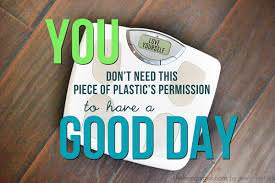
The last straw with your nutrition this month, a good challenge for you: THROW OUT the scale. Yup. Throw it out. You are not a number on this plan—and numbers right now are only going to trip you up. How many times in the past have you tried to lose weight or gain weight, focusing on numbers week after week, only to have that number go in the direction you don’t want to go? Or how many times have you tried to ‘break a habit’—thinking about ‘I will not do this; I will not do that’—only to find yourself doing it, because you are so focused on it? It’s a little ‘trippy’—but we are going to deviate our attention away from numbers right now (Note: if your health is in a place right now where medical weight monitoring is necessary, let your healthcare providers help navigate that number; you probably don’t need a separate scale at home).
Don’t worry about anything else related to your diet or nutrition this month, other than consuming nourishing foods and developing a relationship with your food as the energy and power source for fueling you to do what you do in life (outside the kitchen or table).
If you need to, take baby steps to begin to view food as a nourishing experience, such as practicing the power of positive thinking and nourishing your body, without thoughts of guilt or enticing overpowering cravings even at just one meal. Continue to gradually expand this art to other meals, and don’t move on to the next 30 days until you get there.
For Exercise & Stress Management: Keep it simple. Think about incorporating movement daily—in a life giving, functional manner. This is not about ‘body beat down’; ‘tightening and toning sessions’; or ‘you vs. the scale’—rather it’s about moving your body as it was made to be moved—like walking for instance.
If you have been doing a traditional exercise or gym routine (hitting the weights, stepping up that cardio, pounding the pavement, same ol’ same ol’) or otherwise over-exercising (ie. training with no results), try taking it a step back this month and trading some of the ‘hamster wheel’ routine in for walking, another form of daily physical activity or ‘fun’ movement (like playing soccer in the front yard with your kids instead of watching; checking out the free yoga class on the top of Whole Foods Market; dancing the night away with friends downtown).
And, if you are on the other end of the spectrum (you find it hard to incorporate exercise and movement into your life, or really don’t enjoy it)…just do it. Start getting to know your body better, how it moves, how it feels moving naturally.
When we compare the way we move to the way we are genetically-wired move, the biggest thing missing is, believe it or not, low intensity movement (simply: daily activity in our lives).
Think about it: Many of us fall ‘victim’ to the mentality that high-intensity is the way to train all the time, or we fall victim to the 9-5 sedentary lifestyle the American work force has made ‘the norm.’
Even if you only have time for a 10-minute walk on your lunch break, get out there, or meet up with a friend after school or work for some good social—and movement—time! Most people can make time for a short walk everyday. Replace a 2-3 sessions of your ‘balls to the walls’ workout routine this month for just some simple mindful movement. Be gentle to your body, and this month, let it rejuvenate.
Sleep: If you aren’t getting enough sleep, or if you are sleeping the wrong hours, expect to struggle with your goals for weight gain, weight loss and/or body fat change for sure—not to mention lagging energy, your hormones and cortisol levels being off balanced and feeling ‘in a fog’. In fact, did you know seventeen hours of sustained wakefulness leads to a decrease in performance equivalent to a blood alcohol-level of 0.05%? Sleep is imperative to good health. Poor sleep patterns have been shown to slow metabolism and increase inflammation, insulin resistance and cravings. Sleeping 8 hours is a good target, such as 10 PM to 6 AM. Don’t believe me? Try sleeping consistently for the next week for at least 7-8 hours…and experience the difference for yourself.
Soul (Personal Development):
Vision. What is your vision for this journey? Begin thinking about that—and putting it on paper. What do you want out of your health, your relationships, your career, your education, your spiritual beliefs, your life, your dreams and goals? Vision board time! Break out the old magazines, scissors, glue, markers and posterboard and get to crafting. Tear and cut out any images, words, or phrases that speak to you and remind you what you are working towards. If crafting is not really your thing, the least you can do is write down your ‘mantra’—a quote, a verse, a phrase that speaks to you and reminds you where you’re going. Put either or both of these things in a place you will see it.
In addition, weight, food and exercise aside…what are 1-3 specific goals in your life right now you have been wanting to work on? It could be career or school related…relationship-related….spiritual…personal (a skill or hobby you’ve been wanting to find more time to do; a characteristic you’ve been wanting to develop; etc.). Write down your list of the top 1-3 goals on a piece of paper or notebook—and list an action step you can take this week towards them. The following week, do the same thing—list an action step; and so on and so forth. As you begin to achieve a goal, list another one within your top-3 list, an action step—and keep chipping away. As you begin to develop confidence and invest energy in other healthy goals in your life, you evoke empowerment in other areas of your life as well.
Days 30-60
Nutrition: Continue eating wholesome foods that nourish your body. Regardless of your physical goals, you should not be left feeling deprived—protein, fats, carbohydrates, and water are all necessary components.
Calorie Increase: That being said, if you are a woman, this is also a good time to take a quick evaluation of your total calories because there’s a good chance you aren’t eating enough. If you calories are below 1800 per day, get them up as best you can. Such restriction is certainly not necessary for your body, and the more fuel you can provide it, the more efficiently its going to work in your favor to get your body to it’s optimal place of function. Unfortunately, you may not have an appetite for more food after years of conditioning in a sub-par state. If you just aren’t hungry to add more quantity, try to add calories in through fat (more red meat, cooking oils, handful nuts) to your diet. This may feel forced at first, so feel free to slowly increase rather than make yourself miserable. If you have been eating too little for a long time, expect to gain a little fat when you first start giving your body what it needs to thrive. Don’t let this freak you out! You have to re-condition your body back to a place where it doesn’t feel the need to stuff every spare calorie into your fat cells to get you through these harsh times of scarce food that have been imposed upon it for years. This concerted effort will help increase your metabolism and body’s overall function.
Mindful & Intuitive Eating: This month, we will also begin experimenting with the practices of mindful and intuitive eating—recognizing your hunger and fullness cues (intuitive), in addition with an awareness of providing your body with the nutrients it needs (mindful)—sometimes even when you really don’t want it (like vegetables for instance as a kid when you turned up your nose at the broccoli mom served; or eating a little past your desired feeling of ‘fullness’ when your goal is weight gain).
Prior to one meal each day, assess your hunger on a scale of 1-10 prior to the meal (1 being ravenous, 10 being stuffed), and then following the meal, rate your fullness from 1-10. As repetitive or boring as this exercise may seem, the art of practicing awareness around your hunger/fullness cues will gradually begin to become more and more like second nature (think about a baby or kid—they eat when they are hungry, stop when they are full).
Exercise: Continue walking and, as cleared, begin lifting heavy weights 3 or 4 days per week in workouts that focus on big compound movements like squats, deadlifts, pulls, and presses. The goal is to increase strength and physical capacity. Trust me, you are not going to become an incredible hulk! Building muscle mass is essential to bone health, joint support, reducing injuries and disease, maintaining a healthy body fat, and all-around being stronger for life (like carrying your groceries or lifting your travel suitcase).If you have never lifted heavy before, you will need to find someone who knows the ropes to teach you proper form. Seek out the help of a professional who places an emphasis on proper form, technique and mobility.
Stress Management: Begin intentionally doing something that promotes peace and/or relaxes you at least once per day. This could be meditating for 8-minutes with your eyes closed and nature sounds on in the background; taking a moment of silence for peace; thinking to pray every time you find yourself at a red stoplight or setting a phone timer reminder to do so; taking a little longer than normal shower to wash the worries and stressors from the day away; using some lavender aromatherapy on your skin; getting your nails done every couple weeks—the sky is the limit! Face it, we encounter stressors on a daily basis: stop-and-go traffic, student loan payments, difficult bosses, surprise bills, big decisions. All of these stressors have the ability to elicit a hormonal response that our body, sometimes things, correlates with survival stress (fight or flight). This can do a number on our hormones and homeostasis.
Soul: How is your weekly goal setting and action planning going? This month, your soul challenge entails still keeping up with your personal goals, but I am also going to stretch you. This month, you are going to try something new you’ve never tried before! Something new—and potentially even ‘scary’, or something you’ve been reserved to try—it could be anything! Reaching out to a potential new employer and sending them your resume just to see if anyone responds…writing your book proposal and submitting it to a publisher…taking a spontaneous Southwest trip to visit a friend from college you haven’t seen in years…getting a completely new hair ‘do, etc. In essence: Doing something that scares you—and conquering it, or at least saying that you tried it!
Days 60-90
Nutrition: Don’t change anything about your diet this month and keep up your good sleep and stress-management habits.
Exercise: Now that you’ve given your body some time to recover and rebuild a bit, you can begin adding some sprints to your lifting and walking, 2-3 days per week. The world is your oyster: A high-school track or grassy field, rowing machines, Air Dyne or stationary bikes, are all acceptable for performing sprints. Intensity is the key, no matter which method you choose: 100% effort for a short duration (20-30 seconds). Sprint, then rest for about equal the time, then do it again. A common method for ‘sprinting’ is known as Tabata: 8 rounds of 20-seconds of sprint intervals, coupled with 10-seconds of rest between each set. So 20-seconds on, 10-seconds off, for a total of 8 sets (or 4-minutes). The kicker here is that instead of feeling like a slave on a treadmill or Stairmaster; you are getting a good sweat in, in a short amount of time. Some bootcamp or CrossFit style type workouts train with this type of short-duration intensity that, in the right amount, can be an energy booster and enhance your fitness and health in a positive way (Note: We are not reverting back to 1-month where you potentially needed to detox from CNS-system overload, overtraining or just doing a routine to do it—you are now being intentional and strategic with your workouts).
Soul: Take a look back at your vision board and initial goals. Remind yourself of where you were—and where you are heading. This month, let’s dive in a bit more and start seeking positive reinforcement and knowledge from outside forces: reading a book that promotes personal development and growth. Gets those wheels in that head turning and continuing to move forward. Some titles I recommend include:
- The Purpose Driven Life, Rick Warren
- The Slight Edge, Jeff Olson
- The 7 Habits of Highly Effective People, Stephen Covey
- How to Win Friends & Influence People, Dale Carnegie
- The Four Hour Work Week, Tim Ferris
- Think Big, Grow Rich, Napoleon Hill
- Strengths Finder, Tom Rath
Days 90-120+

If you are finding more balance and peace in all areas of your life, even if it is happening slowly, keep on keeping on—it’s all about the journey, not necessarily the destination. Embrace it and really focus on your body being healthy from the inside out—the more focus on genuine health and well-being, as opposed to numbers, scales and sizes, the more your body will find it’s ‘happy’—where it wants and is supposed to be.
It’s okay if Month 4 becomes Month 5 or 7 or 26.
However, if, in fact, you have not begin to find a healthier, happier or more peaceful place—both with your body and your mind, don’t go it alone. THRIVE offers both 1:1 Life & Recovery consultations and guidance, along with Distance-Coaching. In addition, the guidance of other professionals—from psychologists to a healthcare provider may be beneficial as well.
Again, I will reiterate, there is not a one-size-fits-all approach, and more than anything, this plan is meant to be a general guide to wellness and map for finding balance and peace from the inside out.