


Abdominal Bloating is unfortunately something most of us have experienced at one time or another.
In fact, for many, bloating is a norm they experience every day that they’ve stopped questioning whether or not it is normal at all.
You eat a meal and then within an hour or two of eating, your belly has ballooned and you tell yourself to either a.) wait it out and suck it up, b.) pop a Tums, or c.) try a random assortment of home remedies or laxatives to try to banish the bloat.
Then the next meal comes up and you repeat the cycle.
I’ve been there. Got that t-shirt.
MY BLOATING STORY
Chronic bloating and intermittent bouts of constipation have been with me for years.
As a kid, my pediatrician prescribed me a steady diet of Fiber One cereal and berries with breakfast, prunes for snacks and broccoli or some other green veggie with dinner to help little 6-year-old me banish the bloat.
Fast forward to middle school and highschool, when I started “eating healthier” (i.e. dieting and watching what I ate), I subsisted off raw carrots, apples and fat-free yogurt; however, my gut issues still remained.
Come college and grad school, I didn’t go a meal without a tummy pooch shortly after, often doubled over in the fetal position on the floor after a meal, and always followed by one or two Tropical Smoothie Tums right after to try to suppress the pain.
All this was “completely normal” (or so I thought). Until I found out these 11 Healthy Things (that were actually making me bloated AND constipated).
Are they making you bloated too?

11 Healthy Things That Are Making You Bloated
- Eating (Fake) Fiber
Fiber One cereal, Special K bars with “extra fiber” and Prune Juice (spiked with high-fructose corn syrup-infused) are not real fiber. Fiber is a beneficial micro nutrient that can help alleviate bloating by helping push food along through our digestive system—if and when it’s coming from real food sources. Packaged and processed foods are not the ideal source for fiber, no matter how clever the marketing. Many of the foods lining shelves contain gut-irritating grains, synthesized chemicals and additives that only further contribute to bloating or gut “issues,” down the line. The most ideal fiber sources come from fruits and veggies (particularly cooked or softened leafy greens), as well as some healthy fats (like avocado and nuts and seeds) and whole soaked or sprouted grains. However, keep in mind: too much of a good thing is not a good thing either, and when we 1.) eat a lot of fiber-rich foods that are not easy for our body to break down (like broccoli or Brussels sprouts that contain an oligosaccharide (carbohydrate chain composed of 3-9 simple sugar molecules called raffinose that leads to trapped gas), and/or 2.) don’t eat enough healthy fat, then bloating similarly can happen.Do This: Incorporate leafy greens at least one to two times per day with meals cooked in ghee, coconut oil or olive oil (i.e. in your omelet, a warm salad, wilted greens with dinner, cooked into a spaghetti squash casserole, etc.).
- Crunching on Raw Veggies
Cruciferous and raw vegetables require an extra step for digestion to break down the cellulose in the steams and core structure of our veggies. If we don’t have enough enzymes in our gut to assist in breaking down our veggies, or we don’t chew them up enough, backup in the digestive process along with more trapped gas also happens.Do This: Similar to cooking your greens, cook and roast your veggies and/or pair them with a healthy fat to aid in digestion.Try “crispy carrot fries” dipped in a homemade paleo Aioli or Ranch dressing, celery spread with sunflower seed butter, roasted broccoli spears tossed liberally with avocado oil, or cucumbers dipped in guacamole.
- Using Pam (Cooking Spray)
Fat does a body good. It lubricates your digestive tract and helps push food through the system. Without it or fiber (especially those leafy greens), the digestive process is delayed.Do This:Cook with the real deal—coconut oil, ghee, tallow, lard, grass-fed butter, avocado oil. Fat does NOT make you fat. It makes you less bloated.
- Drinking Smoothies & Green Juice
Ever felt like you were going to float away after ballooning up post-green juice or breakfast smoothie. Since smoothies are liquids, it’s easy to sip these faster, often leading to trapped gas from air we inhale while sipping or a larger amount of “food” at once for our body to digest through.Do This: Sip mindfully. Instead of finishing your smoothie in 2-5 minutes, aim for more like 10-15 minutes.Also if you’re new to green juices or smoothies, adjusting to a lot of produce at once can be a shock for your body. Consider slowly adjusting to green juices and your smoothies by starting off with half a serving in one setting. In addition, make sure you’ve added enough balance of nutrients—1 fruit, leafy greens or other veggies, a healthy fat like MCT oil or avocado, and water, or unsweetened coconut or almond milk.
- Taking Tums
Tums do the complete opposite of what you think they do. Tums suppress stomach acid—which is exactly what you need to aid in digestion. Most people who experience bloating are low in stomach acid due to a variety of stressors (i.e. exercise, mind-body stress, not chewing our food well, antibiotics, toxins in our food). Hence, when you take Tums, you’re actually running in the opposite direction of “curing bloating.” The calcium carbonate makes you feel “better” temporatily, only to return back to bloating and constipation at the next meal since your stomach acid is low (and gets lower due to the Tums). The cycle continues.Do This: Take an HCL + Pepsin supplement and digestive enzymes instead to help your body’s natural stomach acid and enzymes do their job again.
- Going “Keto”
Low-carb, high-fat diets are very popular right now, but unfortunately, a roadblock many folks run into with extremes—in any direction (i.e. low-fat, higher whole grains and carbs; high protein; high fat; etc.) is lack of balance in the long term. Without an adequate amount fiber-rich foods (like lots of leafy greens, or whole food starches and prebiotic foods like sweet potatoes, squashes, plantains, etc.), bloating and constipation are often a byproduct.Do This: If you’re feeling bloating frequently, consider what “balance” looks like in your current diet right now. Have you been following a similar philosophy for some time (keto, high-protein, low-fat, etc.) and not been feeling great? Consider what it could look like to change things up and see if that makes a difference.
- Sipping Sparkling Water
The bubbles! Sparkling and carbonated beverages trap gas and bloating (yes, even eater).Do This: Replace the La Croix, Too Chico or Fruit 2 O water with actual water sweetened with fruit cucumber and/or mint.
- Choosing Low-Fat, Low-Cal or Sugar-Free
One word: additives. Most diet products on shelves contain ingredients with names you can’t pronounce or with a host of side effects (like aspartame= bloating, constipation, heart palpitations, nausea, headaches, blurred vision, etc.).Try This: Eat real food. Full-fat plain yogurt instead of Light & Fit artificially sweetened Yoplait, water with fruit instead of Diet Soda (or, at the very least, Zevia), butter instead of Parkay, homemade avocado chocolate mousse instead of Snackwell’s sugar-free pudding.
- Being Productive
You may feel like you’re getting more done at meal time by working at your desk, reading the paper or crunching numbers, but distracted eating can lead to lack of chewing (or breathing), which can lead to bloating. Digestion first starts in your mouth—with your teeth, and your relaxation of eating. Since digestion is a parasympathetic process, it ideally requires a restful, mindful state of being for proper breakdown of your food to occur.Try This: Turn off the TV, take a break from the screen or the need to “do something” and focus on the art and act of eating at your next meal. Engage in your meal—thinking of the smells, flavors, tastes and act of eating (and chewing). See if it makes a difference in how you feel.
- Drinking Kombucha & Eating Sauerkraut
Fermented probiotic-rich foods are highly touted in the health world. However, if you have bacterial overgrowth in your gut, then these bacteria filled foods can feed those bugs even more (especially if you’re lacking pre-biotics to go with it—the supplement or foods that help keep the “good gut bacteria” stick around in your gut). In addition, many kombuchas out there on shelves are glorified fruit juices—many with upwards of 24-30 grams of sugar per bottle (Which definitely does not do your boating symptoms any good).Try This: If you notice bloating around times of eating fermented foods, consider cutting them out (for a time) and evaluating how you feel. Also consider testing for SIBO (small intestinal bacterial overgrowth) or yeast overgrowth via a breath test and/or stool test.
- Eating LOTS of Healthy Foods You Crave
We often crave foods we are intolerant to. If you find yourself needing a particular food every day, binging on that food or day dreaming and thinking about that food (i.e. nuts, cheese, chocolate, sweet potatoes, fruit or other ‘healthy foods’ you can’t get enough of), you may want to question your own gut bacteria. Cravings for foods we are intolerant to can happen because we have gut bacteria in our gut that feed off of fermented (rotting, dying) foods and bacteria. That gut bacteria may signal to your brain “feed me more ____” (nuts, grains, sweet potatoes), even though you recognize you don’t feel great many times after eating it.Try This: Experiment with a cold turkey cut of that food your brain keeps telling your body to eat (even though you know you don’t feel great after). See if that makes a different. Also consider testing for SIBO (small intestinal bacterial overgrowth) or yeast overgrowth via a breath test and/or stool test.
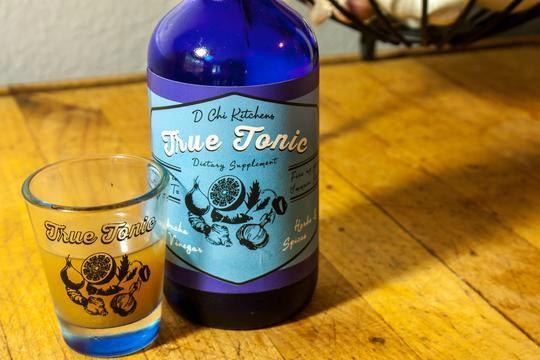
Want instant bloating relief?
Check out True Tonic by D Chi Kitchens! My favorite debating and gut-loving “tonic” support (sort of like Apple Cider Vinegar). All you need? 1 tsp-1 Tbsp. does a body good.