





What should I eat for a run?
Nutrition (and workout nutrition at that) is about as controversial as politics and religion. There is no “one-size-fits-all” approach, but there are several general principles that can apply to most. If you like to run, you may have asked questions like: To carb or not to carb? How many carbs? To eat before or not? What to eat after? Read on to get some clarity…
Running is one of the most popular forms of fitness.
In fact, a survey conducted by Timex a few years ago revealed that running is the top choice of Americans, only next to walking (considered the “mac-daddy” exercise of them all?)
And it makes sense.
Running is cheap.
It’s convenient.
And it makes you feel like you “worked out.”
Couple this with the rise in FitBits (nearly 10 million “active users“) and other fitness tracking apps that give you “gold stars” for burning calories, taking more steps and getting into your “fat burning zone” and it’s no wonder that running seems like the obvious choice for a good sweat.
However, on the opposite side, something I’ve noticed over the past few years ( is that there’s A LOT of negative talk about running (especially in the eating disorder recovery world, Crossfit and primal/paleo worlds)—Citing running as a form of “chronic cardio” (i.e. no bueno).
I see where they are coming from. When abused, running CAN run you into the ground.
But, the truth is, if running is something you truly enjoy doing, running can fit into a healthy movement routine—just like weightlifting, CrossFit, spinning, canoeing, basket weaving…and beyond.

The key into getting the MOST (health) out of your fitness lies in the fuel (i.e. FOOD) you give your body.
If running is on your top hit’s list, then fueling up is a must.
And NOT just any fuel…but some key essentials for running fuel (that Dr. Google probably won’t tell you about).
Want the lowdown on how to Fuel for a run—before, after and during?
Get this:
- 5 Things to Eat Before You Train
- 5 Things to Avoid Before You Train
- The Truth About “Carbing Up”
- 2 Essential Nutrients You May Be Missing
- 1 Key “Game-Changer” for Enhancing your Performance
- A Sample Meal Plan (Along with my Favorite Recommended “Convenient” Foods and Supplements)
- And Bonus Downloadable Recipes
Here’s to thriving in your run!
5 Things to Eat Before You Train
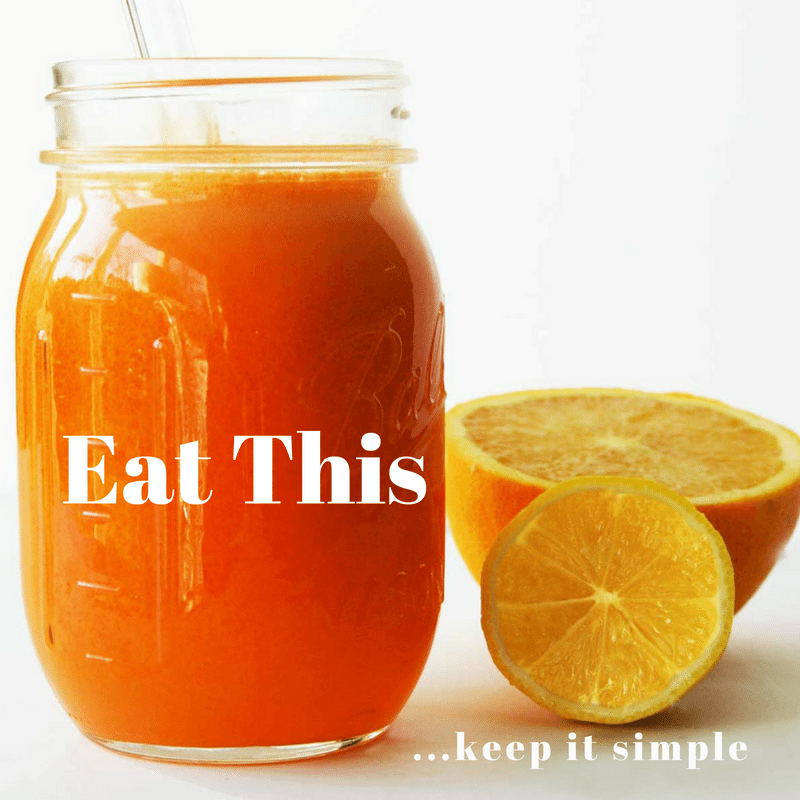
First things first “WHAT SHOULD I EAT (before a workout)?” is a question I am often asked—no matter the sport or exercise of choice. Here are 5 of my favorite “grabs” before a more endurance-based workout—when foods that “settle” and digest well are essential (no one likes to feel like they have to run to the bathroom mid-run with the runs!):
- Blended & juiced foods (simple, think 3-4 ingredients at most, like carrot, ginger and coconut water or spinach, lemon, lite coconut milk or water)
- Small Amounts of Caffeine (Bulletproof tea or coffee is legit)
- Easily Digested Proteins: Jasmine Rice, Sweet Potatoes, Bananas, Plantains, Butternut Squash, Greens (in juice/smoothie)
- Easily Digested Proteins: MCT Oil, Coconut Oil, Coconut Butter Grass-fed Butter/Ghee, Udo’s Oil
- Easily Digested Proteins: 20-30 Grams Hydrolyzed Whey or Beef Isolate, Bone Broth, Amino Acids in water (see supplement recommendations below)
Note: Depending on the time of day you run, your meal size may vary. For instance: Run first thing in the morning? You may find you do better on just a little something—like 1/2 a banana or some green juice or coconut water, then fueling up right after. Hungry, but know a meal will not settle well pre-run? Reach for a small snack, like some plantain chips and guacamole, banana and coconut butter, or simple protein smoothie. Run after work? For some, a good balanced lunch of proteins, carbs and fats gives them lasting energy in the tank to get through your 3-6 miler. No matter what though, water is essential pre-run.
5 Things to Avoid Before You Train
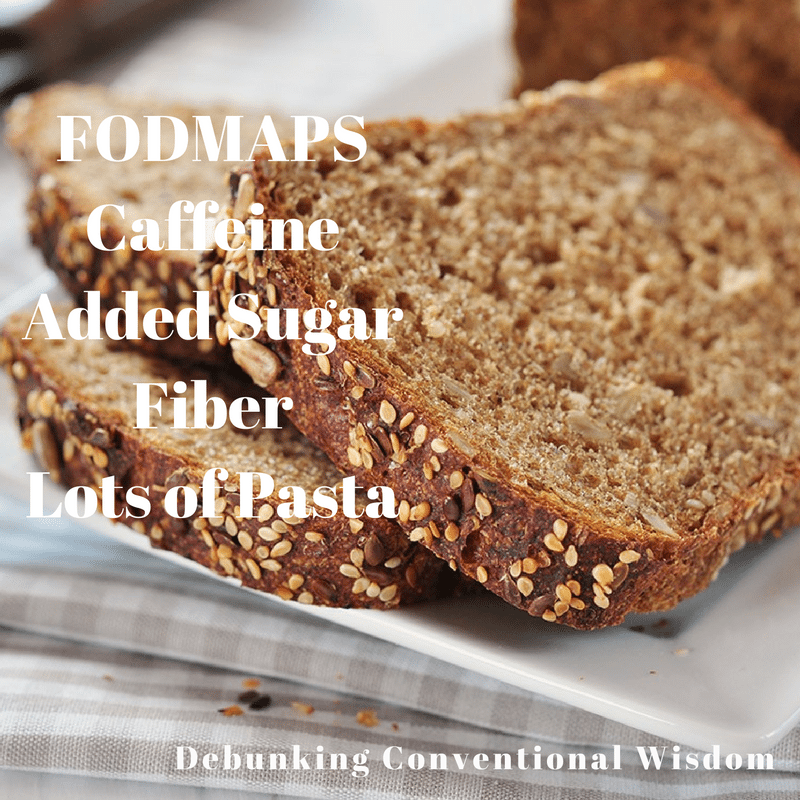
Check. Check. Now we know what to eat…how about anything to avoid? Yes. While I am a big believer in 80/20 balance with food choices in life, when it comes to supporting your endurance endeavors, here are some foods that may not be the best choice to get you through a quality run (digestion and energy-wise):
- FODMAP’s: Like wheat, dairy, high-fructose fruits (apples, pears), garlic, onions, broccoli, cauliflower, cashews, honey, breads, sports drinks, fruit juices, cheese, yogurt and other dairy foods. Fructose and malodextrin in FODMAP foods challenge digestion, trigger loose stools (or the opposite constipation) and do not provide a lasting source of energy.
- Lots of Caffeine.Yup. Cool it on the coffee and energy drinks. You get a high, followed by a crash and blood sugar imbalances because caffeine “feeds” cortisol, which jacks with your blood sugar. Capiche?
- Sugary Drinks and Bars, Artificial Sweeteners & Chemicals (When we dose on sugar, we get lots of energy, followed closely by a CRASH or ‘bonk’—making us need more sugar or caffeine to keep going. In other words: Your body rides a blood sugar roller coaster. And, get this: Did you know that your body sees artificial sweeteners JUST like it does sugar? Artificial sweeteners like aspartame and Splenda cause your insulin spike, followed by a crash; Chemicals with names you can’t pronounce=undigestable to your body as well).
- Lots of Fiber. One word: Bathroom. Fibrous foods include: enriched cereals, oats, fruit, smoothies, salads, lots of veggies.
- A Big Bowl of Pasta. Carbs are necessary, but if there’s one thing to take away from this article today it is: Balance is more necessary. Gone are the days of pasta parties or eating a big bowl of oatmeal, juice and a banana before a race. Your body ALSO needs proteins, and arguably, more fats then you may have given it under the old-school advice of “eat lots of carbs.” Carbs ARE important for glycogen stores, but there are two nutrients that are actually more important….
The Truth About “Carbing Up”
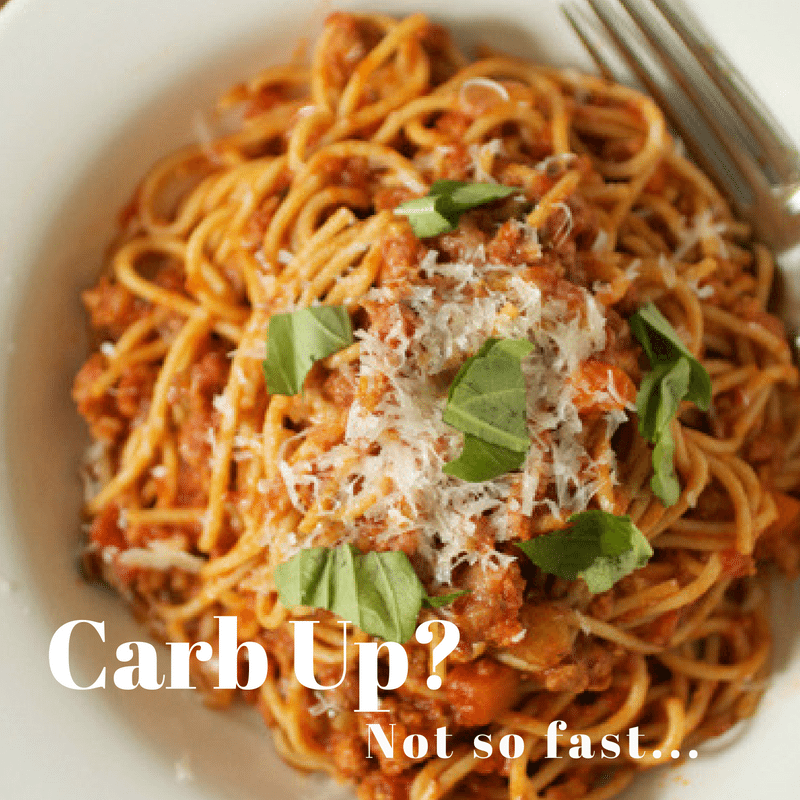
Ask any old-school running coach or Google search “what to eat running” and your sure to find hundreds of tidbits and articles saying the same thing: “Eat more carbs.”
Unfortunately, what is NOT said here though is that when our focus becomes on increasing carbs for performance—and double dosing on blueberry pancakes, spaghetti with red sauce and a big bowl of Wheaties, we run into a big predicament: Bonking and crashing.
I mentioned this previously, but many runners have trained their bodies to become ‘sugar-needers’ or ‘sugar burners’—adapting to a diet heavily based on toast, cereal, oats, pastas, sandwiches and other grain-based products for their primary source of fuel.
The thing about sugar (i.e. carbs), is it does not last very long in the tank—and just as quickly as it goes in the tank, it is quickly depleted once the run ensues.
while this may SOUND like a good thing (especially if you’re in the diet mentality of ‘burning calories’ and ‘burning food up’), when we rely on sugar for our energy, we send our body on a blood sugar roller coaster.
When energy stores are depleted, our body wakes up and demands what it knows you have adapted to give it: MORE sugar please. (Or caffeine—which works similarly to sugar).
So you reach for the goos, the gels, the gummy bears, the chocolate bars, the PB & J sandwich, the fettucini noodles, the Kasha Krunch, the Clif Bar, the granola, the cinnamon apple oatmeal, the apple or grapes, the Gatorade, the Odwalla smoothie…and your body is doused with more energy (for a short time)…once again, followed by a crash. Repeat.
In addition, as carbs and sugars make up the bulk of the diet, the pancreas (your organ that helps with blood sugar balance) gets overloaded…leading to increased oxidative stress…leading to inflammation…leading to poor performance output…leading to poor recovery.
And the beat goes on.
Outside of the run, your bod has been wired to want and demand the same thing.
Crave sweets? Need an afternoon coffee or candy pick-me-up? Reach for ‘quick’ sources of fuel for snacks—like Goldfish or Cheez-Its, pretzels, granola bars or fat free yogurt cups? Can’t stop dreaming about ice cream or pancakes? Don’t feel complete without your turkey on whole wheat and Baked Lays?
Your bod is conditioned to be a ‘sugar-burner’—and may be a bit imbalanced.
How to bring it back to balance? Make sure you’re getting these:
2 Essential Nutrients (You Are Probably Missing):
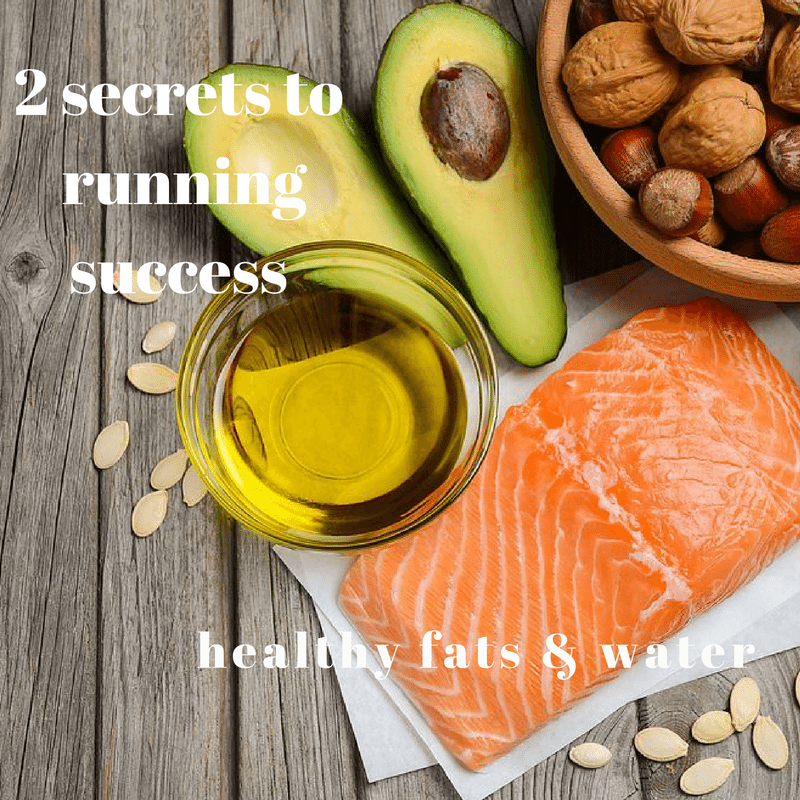
#1. Fat
Fats may be more superior to carbs for lasting energy…
Say what?!
Yes, I know it’s shocking. However, more and more research is being conducted around the long-term (positive) effects of using fats to fuel performance—over higher carbs.
One study compared the effects of a “ketogenic” (i.e. high-fat) diet on endurance performance in test subjects, finding, after 6-weeks of eating a higher fat diet, research subjects doubled their ability to run longer (endurance time), even though their VO2 max remained relatively the same.
Another study, comparing a traditional higher-carb endurance diet with a higher-fat diet in cyclists found that the cyclists who switched over to the higher-fat diet did NOT experience one slight decrease in their performance, despite the absence of carbs for 4-6 weeks.
And more and more athletes are beginning to experience the power that a higher fat diet can provide—like Timothy Olson and Zach Bitter (the 12 Hour World Record, 100 mile American Record, and 200k American Record Holder).
One more study, outside the scope of endurance sport is :the U.S. Defense Advanced Research Projects Agency (DARPA), has even been investigating the role of a High-Fat diet in boosting soldiers’ mental and physical performance under battlefield conditions.
Why?
When we rely primarily on carbs and glycogen as our first energy source, before long we burn right through it, leading to a drop in blood glucose levels—as well as a drop in energy and performance output.
When we bump up the fat, our body turns first to fat as the preferred energy source to use and burn—saving any leftover glycogen stores for later on in the run or race, when we need it most.
By training our bodies to become ‘fat adapted’ (by eating more fat), essentially, your body LEARNS how to use FAT (instead of sugar) as fuel—and it lasts longer.
In addition, we balance our blood sugar levels, and have more (lasting) energy to power us through, not only our runs, but also the rest of our days (good bye 10 a.m. lulls, 4 p.m. “I need a nap!” times, and hunger headaches).
Win. Win. Win.
And you don’t need to “go ketogenic” to experience positive results.
Simply consider BUMPING UP YOUR HEALTHY FATS, by including a fat with EVERY MEAL, and decreasing your reliance on a low-fat/fat-free, grain-based, lean meat diet…
Then see how your body (and energy levels respond).
Some healthy fats to choose from include:
- Avocado
- Ghee
- Grass-fed Butter
- Coconut Oil
- MCT Oil
- Extra Virgin Olive Oil
- Avocado Oil
- Raw Nuts & Seeds, Nutbutter
- Coconut Butter
- Pastured-Eggs and Organic Animal Meats
#2. Water
The other ESSENTIAL nutrient we haven’t talked about yet?
Water of course! (Duh!).
Just like a plant needs sunshine and water to thrive, your body needs REAL FOOD and lots of water—preferably half your body weight in ounces.
Your body itself is comprised of at least 60% water so for all the amazing processes of life to flow (like metabolism, digestion, nutrient uptake, elimination, sweating, etc.), water gives your body LIFE.
(And I am not talking about sports drinks, electrolyte powders, smoothies or coffee here. Straight up water).
Water=natural energy booster. Bonus: Add a pinch of sea salt and lemon in the morning for a natural “electrolyte” booster.
Post Workout Nutrition
We’ve talked a lot about WHAT to eat before you train. Now how about what to eat AFTER?
Contrary to popular belief, IF you are fueling your body with a BALANCE of REAL FOODS (proteins, carbs—primarily veggies, fruits and some starchy tubers; fats; and water), then the “post workout” meal is really not as important as much literature has made it out to be.
In fact did you know that in most every study on the subject claiming that the “post workout window is essential,” test subjects were in a fasted state prior to exercise?
In other words: Duh, they needed food after their workout—they were depleted from the get go.
A few thoughts on your post-workout nutrition:
- Don’t believe everything you hear. Often times even studies skew research to find the results they want to see. (Find what works for you).
- Cortisol Levels=High Post Workout. The most important thing is to drink water 20-30 minutes after, and if you’ve actually had a pre-workout meal, or any other recent meal, there’s no crucial, do-or-die need to eat after your workout – (especially if you’re still “burping up” that meal you ate before your exercise session)
- DO use FUEL Post-Workout if you…
- Haven’t had anything to eat before or you’re totally depleted…
- You plan to train again in the next 8 hours…
- You’re trying to pack on muscle or gain weight
4. Most Important?: Digesting Your Food. Many shakes or ‘eat whatever I want’ mentalities lead to one thing—> poor digestion
1 Key “Game-Changer” for Enhancing your Performance

Above all, if you want to make ANY of this nutritional wisdom work FOR you, the key “game changer” for fueling your performance—no matter your sport or fitness of choice—is your digestion.
How is YOUR digestion?
If our digestion (and gut flora) is imbalanced, then we run into roadblocks in our training and daily healthy lives, including:
- Bloating
- Gas
- Constipation
- IBS/Loose stools
- GERD
- Allergies (Seasonal or food)
- Breakouts
- Fatigue
- Poor recovery
- Blood sugar or hormonal imbalances
- Sugar cravings
- Headaches
- Autoimmune conditions
- Etc.
The struggle is REAL.
Approximately 1 in 4 Americans report have some sort of digestive ‘disorder’, the same amount (1 in 4) have an autoimmune condition, an even higher amount report allergies (approximately half of all Americans) and 50-million people experience acne.
To say the least: “Gut issues” and poor digestion are widespread.
When your personal eco-system (i.e. digestion) is off…the uptake and absorption of your fuel is slowed…resulting in one (or many) of the above conditions.
How to improve it? Here are some simple steps:
Heal Your Gut
- Drink half your bodyweight in ounces of water each day
- Eat real foods (your body recognizes)
- Avoid gut-irritating foods the majority of the time (wheat, conventional dairy, processed foods, artificial ingredients)
- Slow down
- Breathe before you eat
- Chew your food
- Start your day off with warm lemon water & end it with Ginger Tea
- Take a probiotic each day + digestive enzymes with meals (Like UltraFlora Spectrum and Spectrazyme Complete by Metagenics)
- Incorporate fermented foods into your diet (sauerkraut, kombucha, fermented yogurt)
The gut IS the gateway to health (and performance).
Focus on good digestive wellness, balanced meals throughout the days, and ultimately, LISTENING (and experimenting) with what works best for YOUR body.
Want more?